Trunk Club (Nordstrom) · Director of Product Design
Get a Trunk
Rebuilding the first request raised new-customer Trunk requests 17%. The target was 3%.
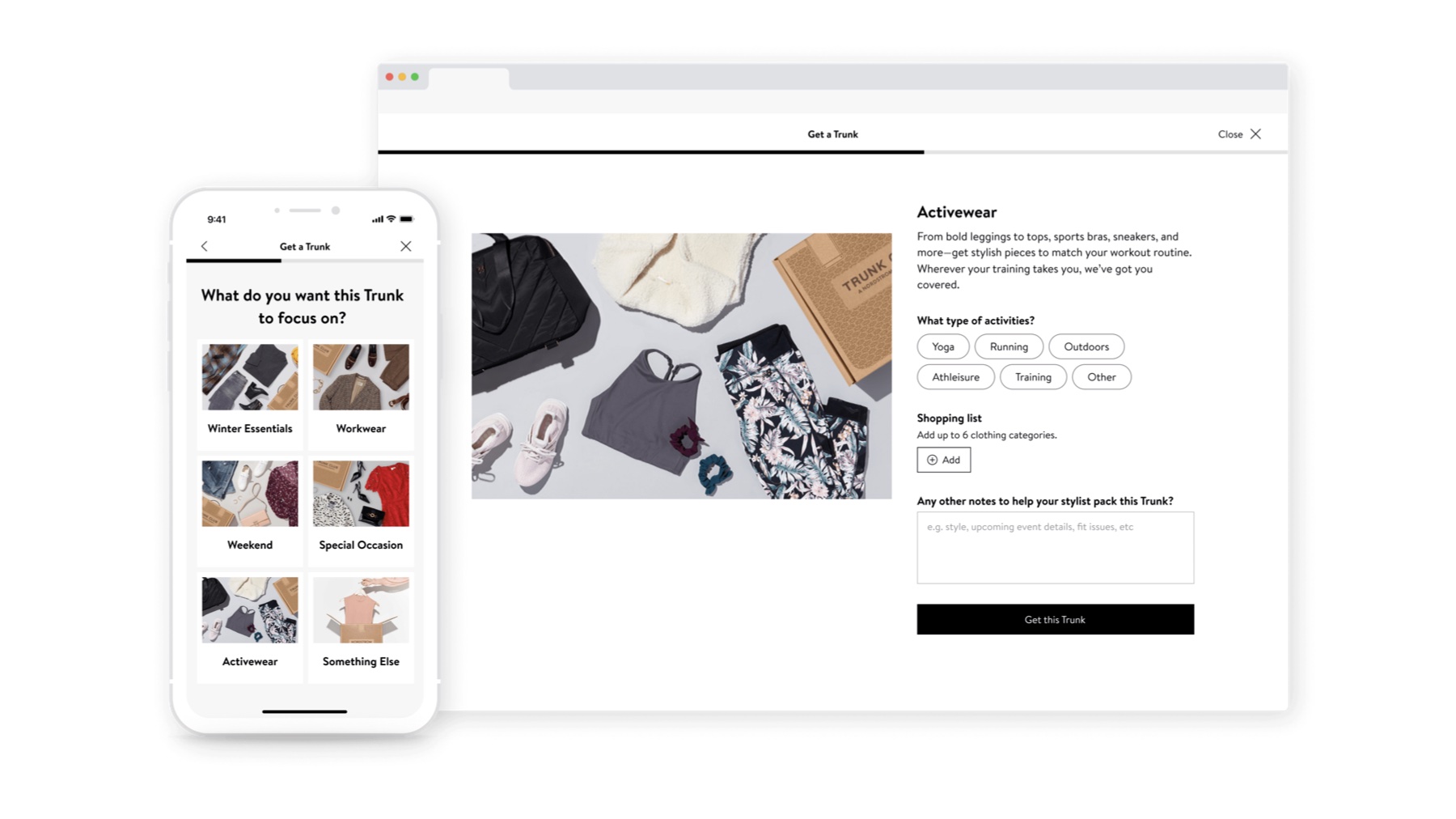
The company
A personalized styling service
A stylist packs a Trunk of clothing based on a customer's style, budget and needs. Customers try items at home, keep what they like, and send back the rest.
Nordstrom acquired Trunk Club in 2016, and integration was just starting. I led product design for the customer-facing and stylist-facing products.
The brief
Tweaks had stopped working
The brief asked for "Express Preview Improvements": minor changes to an existing flow. Earlier rounds of tweaks had produced flat or negative results.
In an ideal world, the project would re-examine the whole onboarding flow. Time and technical limits narrowed the scope. So did the work to coordinate style quiz updates with data science. We focused on the request flow for new customers.
I met with product leadership and got buy-in to spend more time on research and new solutions. With the team, I flipped the narrative from output to outcome. That gave us room to discover what customers wanted, instead of shipping and hoping.
Targets: raise lead-to-Trunk requests 3%, raise preview confirmation 2%, cut preview expiration 4%.
Why
Trunk Club was changing its business model. Stylists used to start a 1-to-1 conversation to learn what each customer wanted. That broke at scale. We needed one stylist to serve many customers.
The question: how do we raise new-customer Trunk requests and still learn enough to pack a great first Trunk?
The first pass was a tech solution. It lost customers and confused them.
What was broken
65–75% of new accounts never requested a Trunk.
This flow had the second-highest drop-off in the onboarding funnel. Customers left right after account creation, when we asked for personal information, or at the Trunk preview.
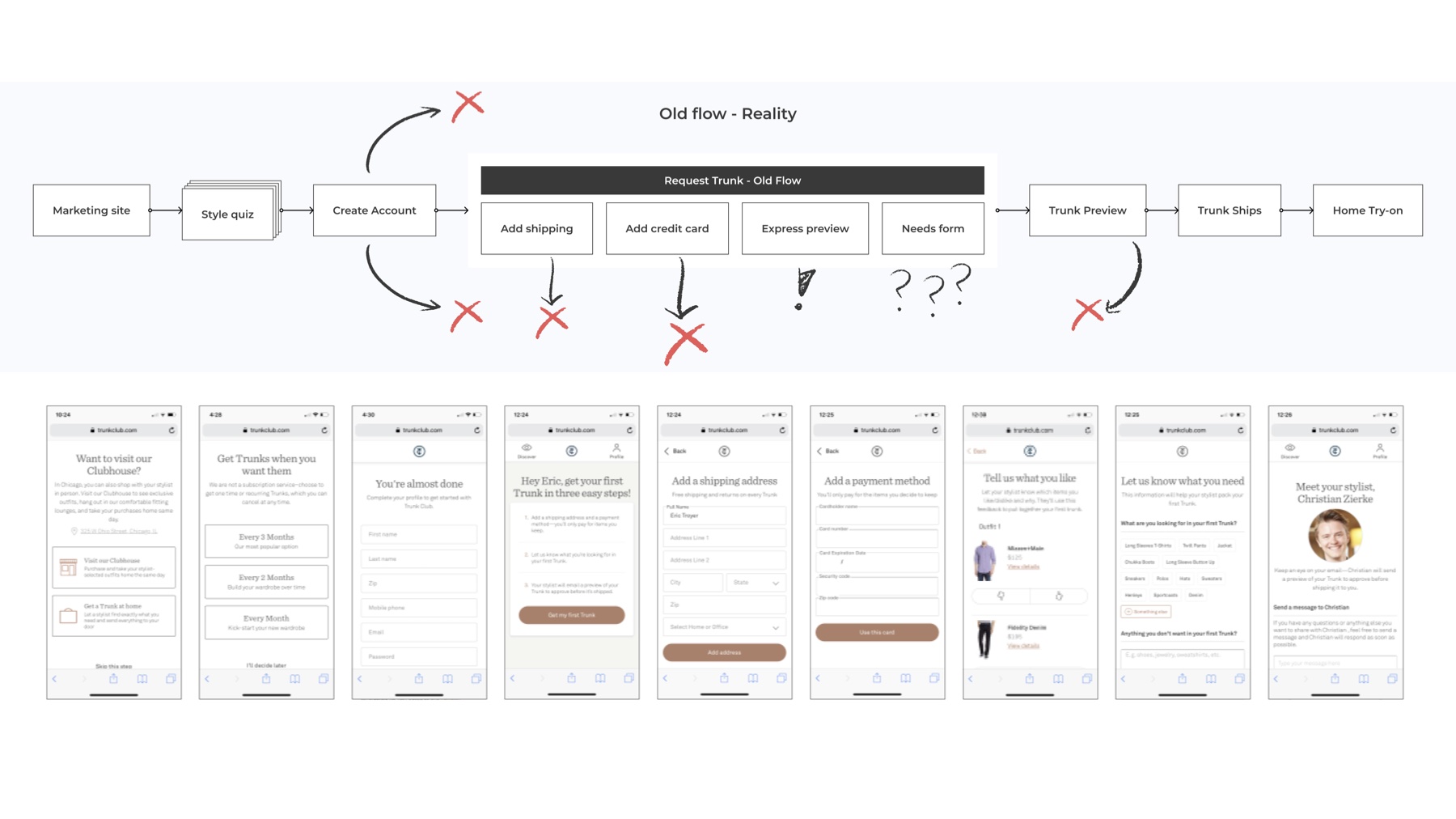
The old flow, as designed and as customers used it.
No guardrails, little guidance
After sign-up, the app dropped customers where the Messages tab would sit. A screen asked them to request a Trunk, but many went to Discover or Profile instead.
Others created an account on web, then downloaded the iOS app. Their messages went nowhere, because no stylist was assigned yet.
What's in it for me?
The flow asked for a shipping address and credit card first. That step had the highest drop-off. It asked for sensitive data before it built momentum or showed value.
Customers asked: Will I be charged now? What does a Trunk cost? What is a styling fee? Many Nordstrom cardholders missed that their card waives the fee.
"I knew it was a robot."
The flow showed data-science-generated outfits, called "express preview." They appeared so fast that customers knew a human had not picked them. Customers doubted a human would pack their Trunk.
Stylists disliked it too. They could not tell why items were liked or disliked, so they removed the items before packing.
Heavy cognitive load
Customers thought the suggested items were already in their request. Nothing limited the number of items or showed how many fit in a Trunk. Stylists received requests that did not fit.
How does this work?
Customers did not understand what a preview was, when it would arrive, or when the Trunk would ship. They did not know if they could request a date, or when and how much they would pay.
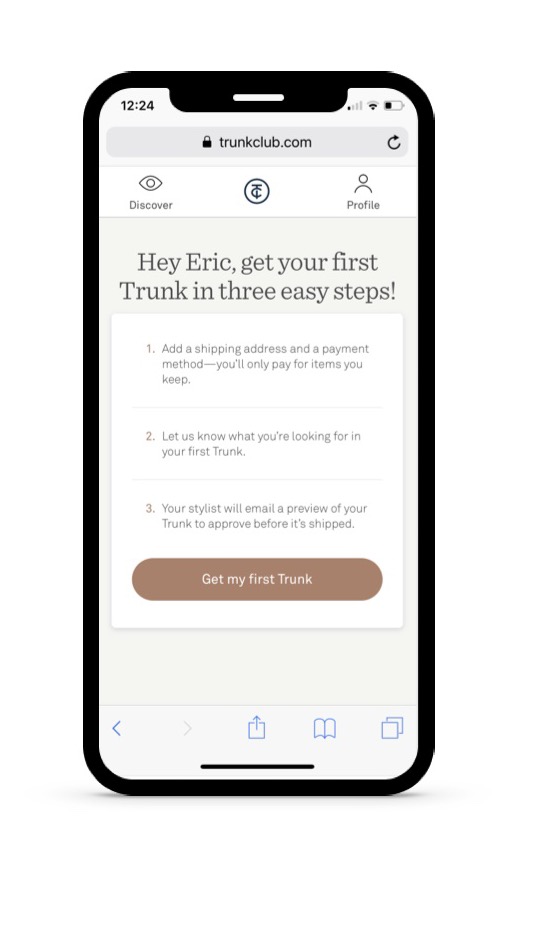
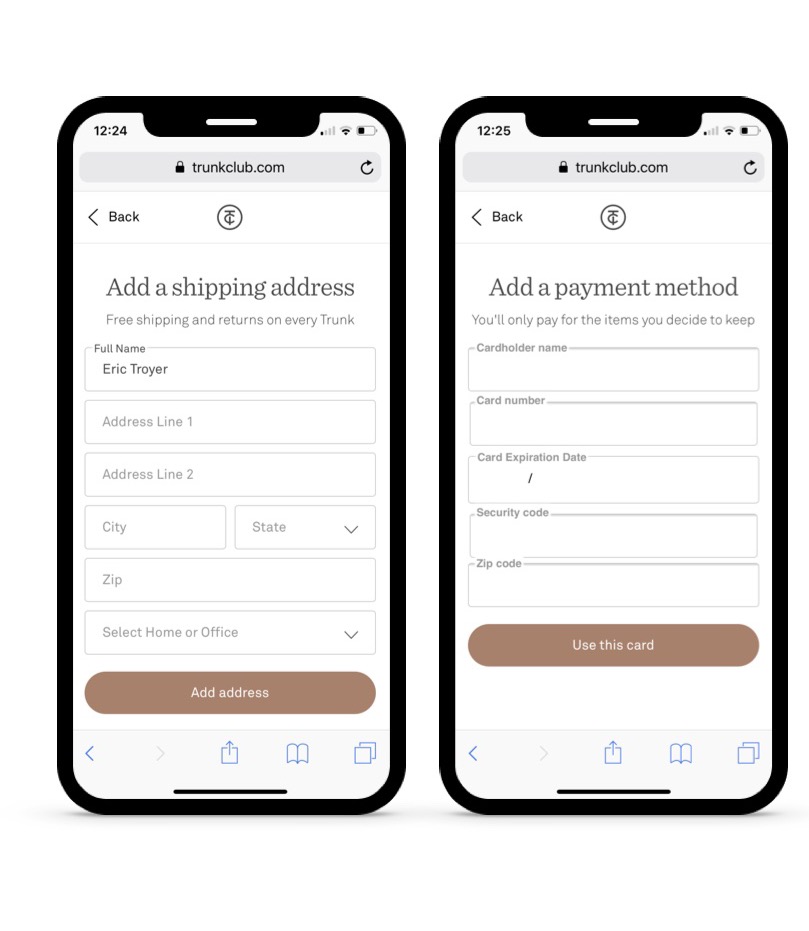
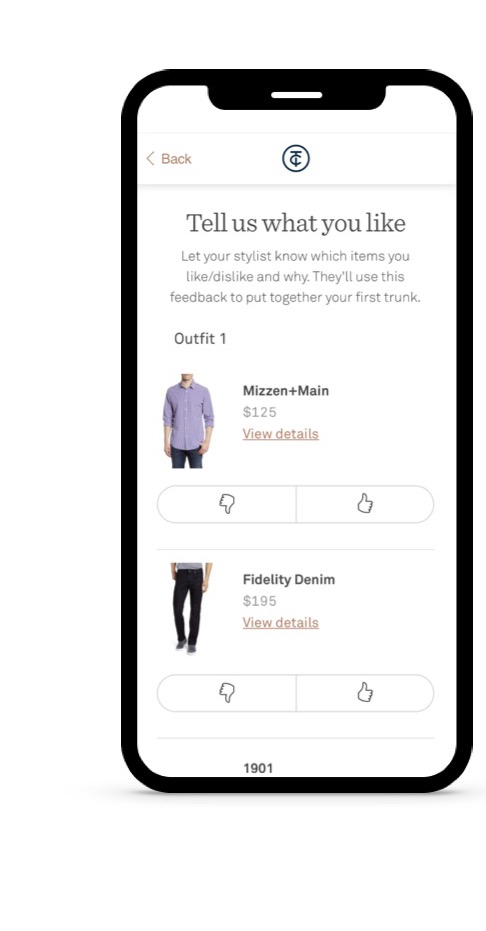
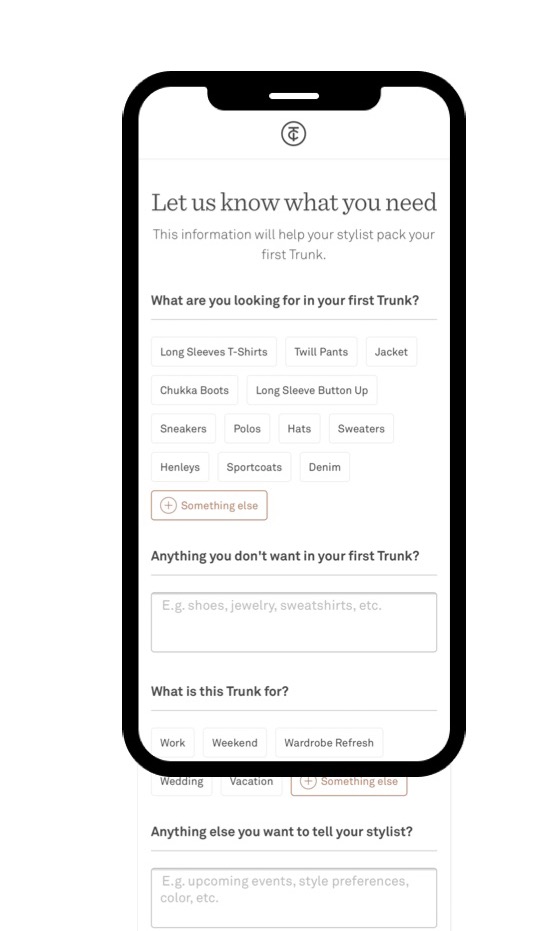
Before: the old request flow.
What we learned
Customers needed a focus. Stylists needed a theme.
The research
Our researcher ran a dscout diary study that followed new customers as they signed up. We interviewed stylists. We also mined past stylist chats for themes and quotes, because those chats held the needs of existing customers.
- Some customers knew exactly what they wanted. Others wanted the stylist to decide.
- Customers had a trigger occasion. Stylists asked about it first: "Is this Trunk for work, a weekend, a special event, or something else?"
- A theme helped stylists pack a curated Trunk. Without guidance on current needs, they could not pack Trunks that convert.
- Blank, open-ended forms felt like work. Customers wanted to see options and get inspired.
- Customers with an event date wanted to choose a delivery time.
We added the insights to an empathy canvas, which kept the customer's voice in every review.
What we explored
One idea won. Two did not ship.
The workshop
I led an ideation workshop with engineers, designers, product, marketing and business analysts. We mapped affinities, sketched against the clock, dot-voted, and pushed the top sketches further.
I then ran a prioritization exercise on feasibility and expected impact. The team chose one idea: show customers themes to choose from, then customize. Customers already had occasions in mind. Stylists already used themes in their conversations, and they loved the idea.
We iterated through critiques with the squad, the design team, stylists and stakeholders. We recruited users to test a prototype, and we refined the concept by effort and scope.
What did not ship
- Top 3. Customers add their top three items. Customers responded well to the suggestions and search. Stakeholders and stylists found it too restrictive.
- Notes and inspiration. Customers add notes per item and browse inspiration. Customers loved the inspiration. Some found per-item notes slow. Our internal styling tool could not support item-level feedback.
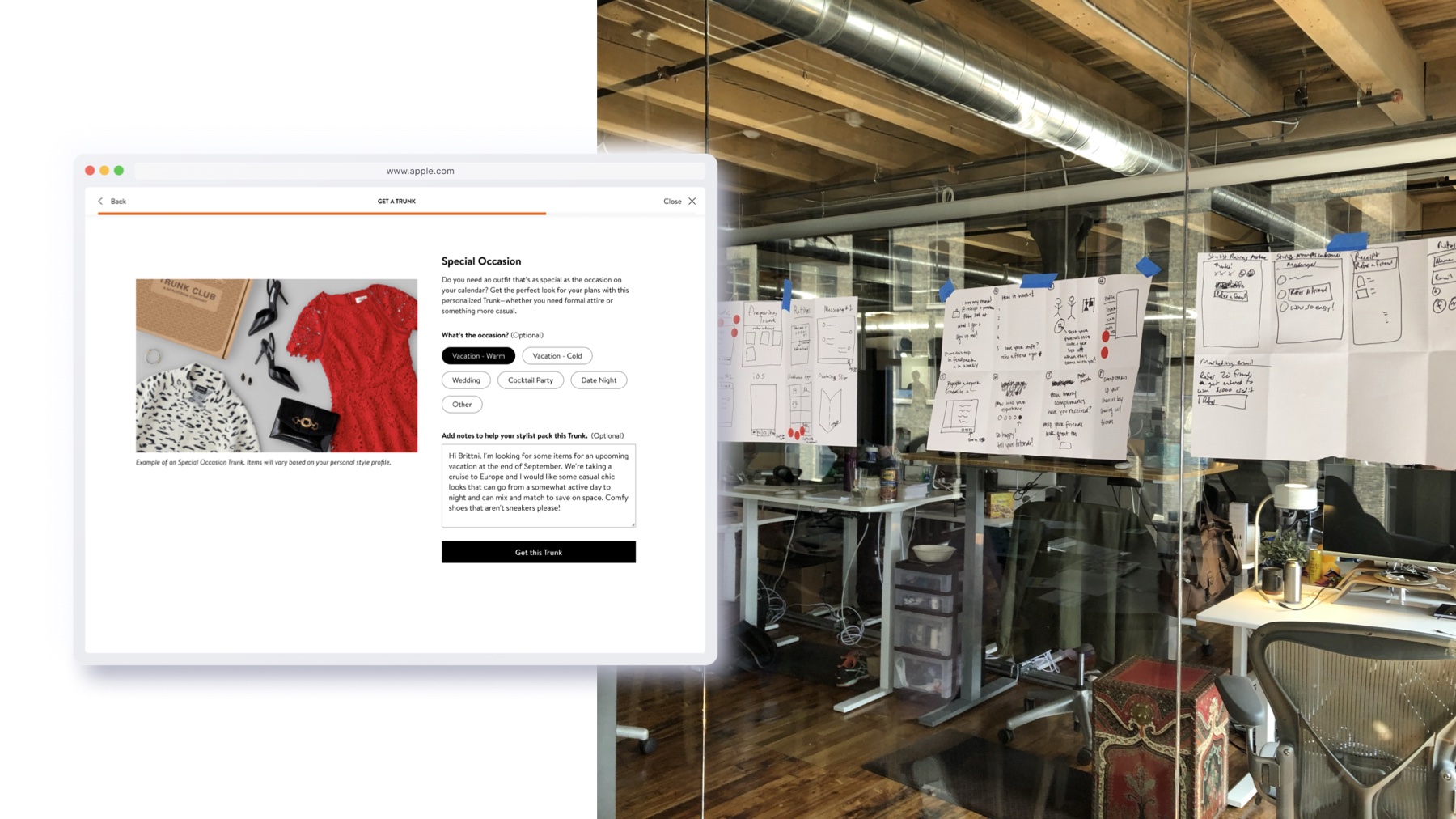
The two concepts that did not ship.
The curve ball
Nordstrom changed the design system mid-project.
What happened
Midway through exploration, two things happened. A new PM joined and defined the MVP. Nordstrom announced that Trunk Club would integrate fully, so our brand and design system had to move toward Nordstrom's.
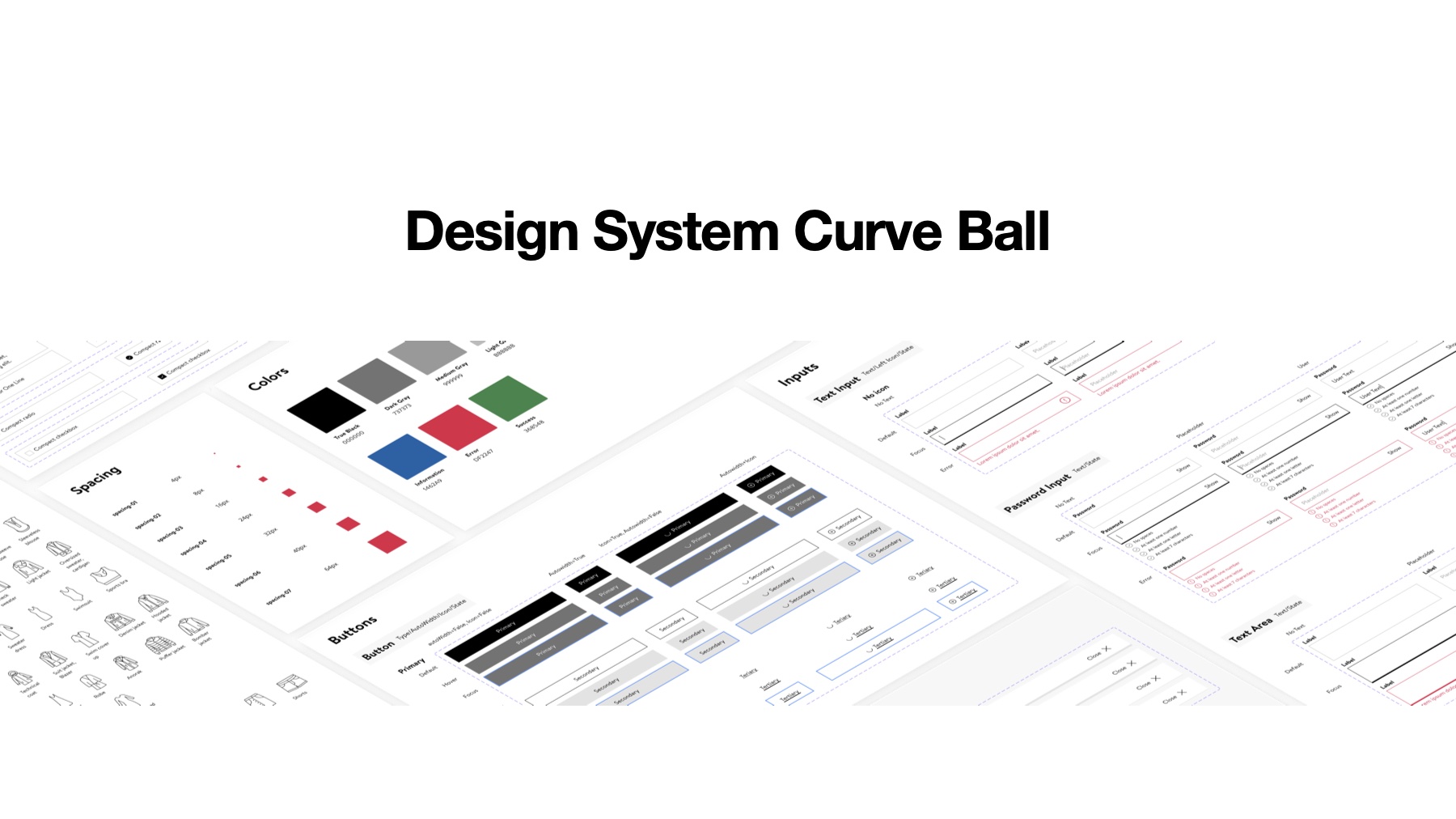
I led a design audit and made short- and long-term recommendations. Our design system, called Thread, lacked shared styles, components, consistency and guidelines. Fast-moving small and midsize companies often end up there.
The short-term plan: make simple visual changes. The long-term plan: build a new design system in Figma. Ship it in code with a lift-and-shift into Rebass, documented in Storybook. Get a Trunk became the first feature on the new system.
What we built
One occasion. Six requests. No surprises.
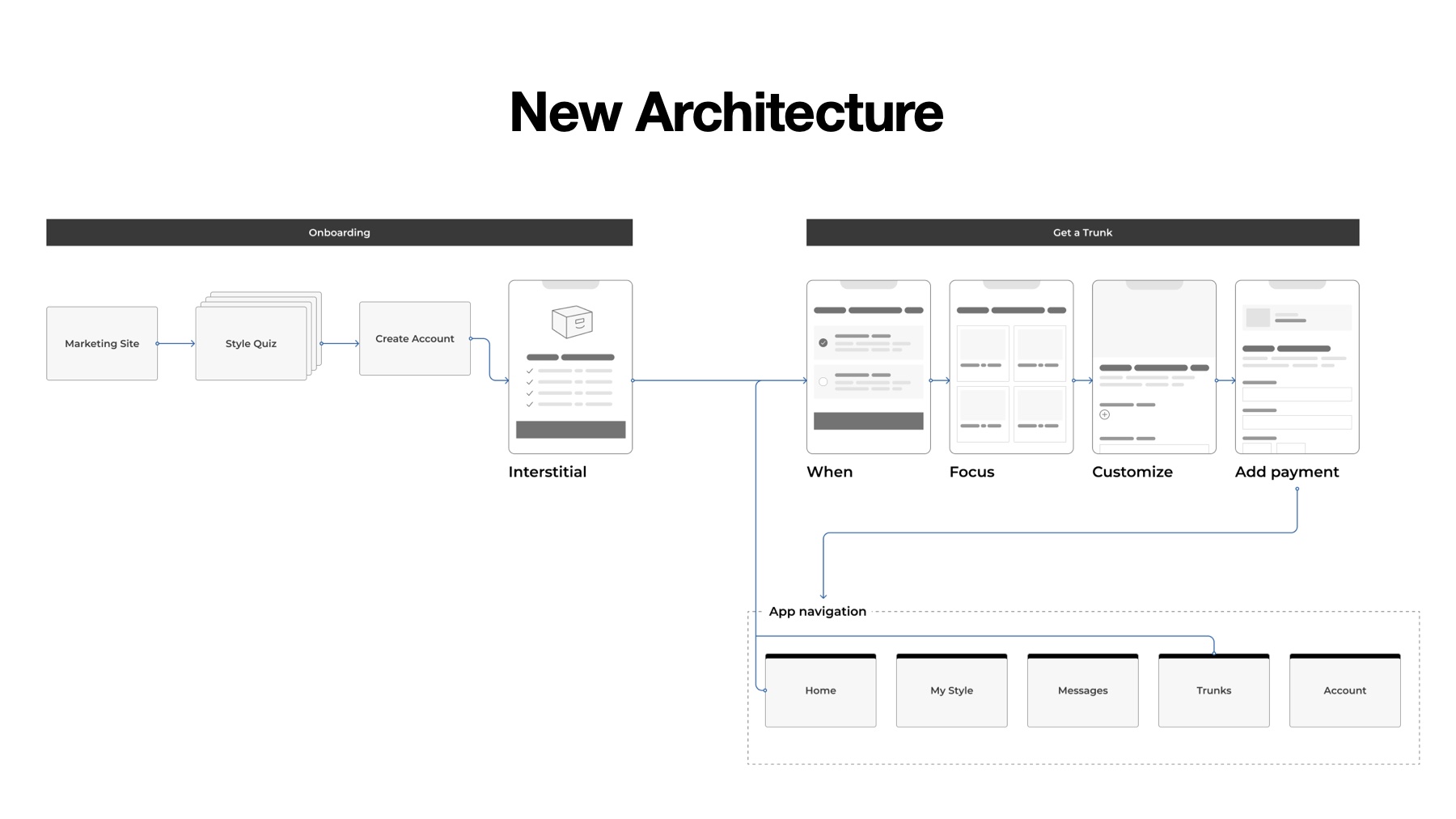
The new architecture. Empty states for the Messages and Trunks tabs keep the navigation the same before and after a first request.
New architecture
The old flow was a single track. Customers had to finish each step to move forward. The new flow lets customers explore before they commit.
Messages invites high-touch customers to start a chat. Trunks offers a Request a Trunk button and a three-step "How it works."
A separate squad redesigned the main navigation with Home and My Style sections. We used its Trunk status card as another prompt for new customers.
Before · payment
After · payment
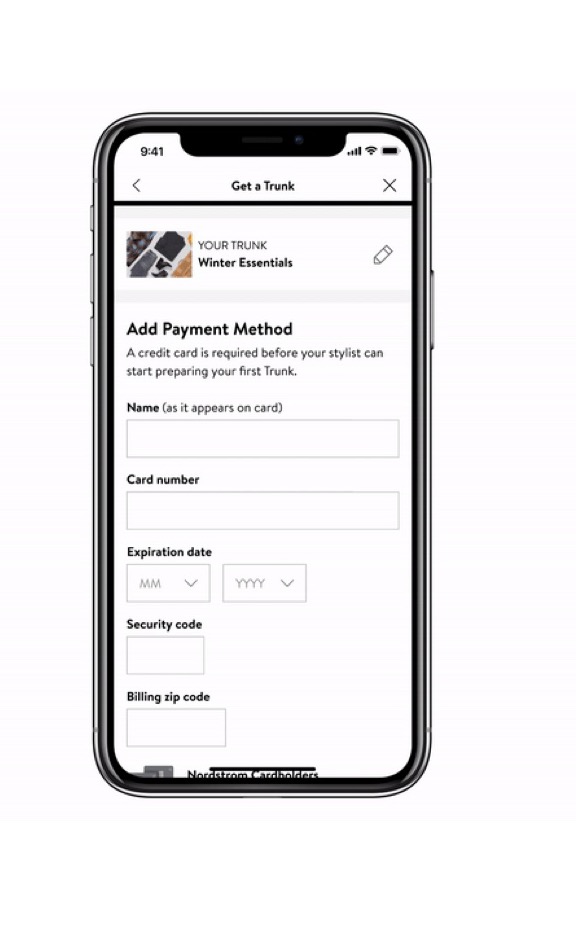
Payment, before and after. The new step explains the card requirement and the styling fee.
1 · Entry point
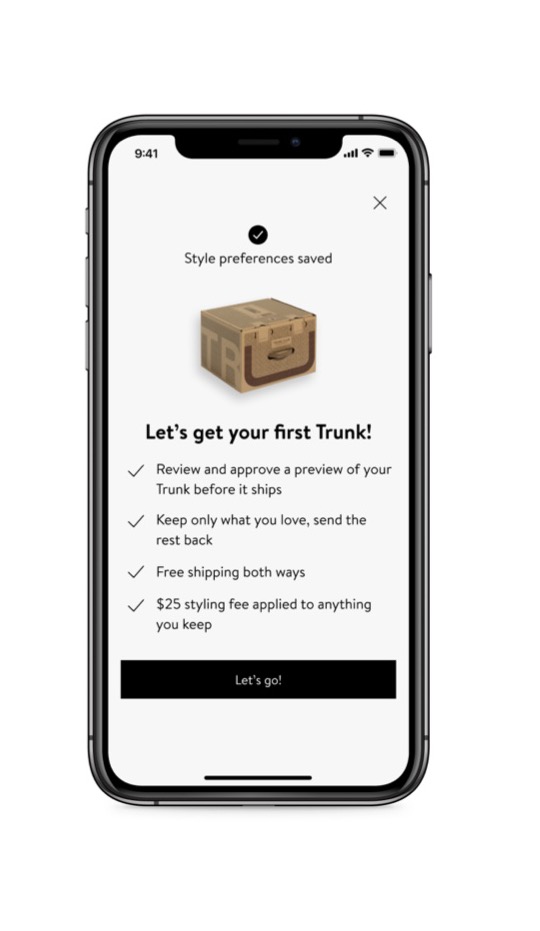
The old request button lived where the Messages tab sits. A modal now opens the flow. It states the value props and answers the questions we heard most in testing. It focuses attention and does not trap anyone. Customers can close it and land in the navigation.
2 · Schedule
Testing showed new customers wanted a Trunk as soon as possible. The step defaults to ASAP and promises a preview within 24 hours. It hides the calendar until a customer chooses to schedule.
3 · Focus
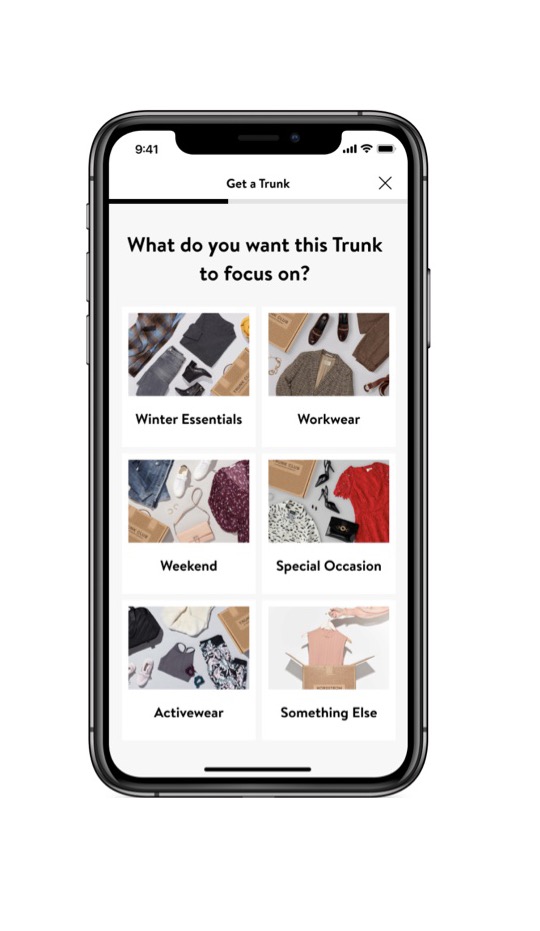
Customers pick one occasion for the Trunk. One focus reduces choice paralysis, sets expectations, and gives the stylist a clear request. We based the options on themes from dozens of stylist conversations. Marketing wrote the copy and made the imagery. We used Contentful as the CMS, so marketing can change seasonal content without asking for roadmap time. Before, content updates were manual.
4 · Details
This step took the most iterations. We balanced simplicity and customization. Some customers wrote detailed requests. Others wanted to see what the stylist would pack. The final design allows up to 6 category requests and a free-form note. We chose a type-to-add option over search and browse to reduce scope for the first release.
5 · Payment
Payment moved to the end of the flow, after customers know what they are getting. The step explains why a card is required and states that the card is not charged now. It names the styling fee and notes that a Nordstrom card waives it. Customers review and approve the Trunk before paying.
Result
+17% lead-to-Trunk requests. The target was 3%.
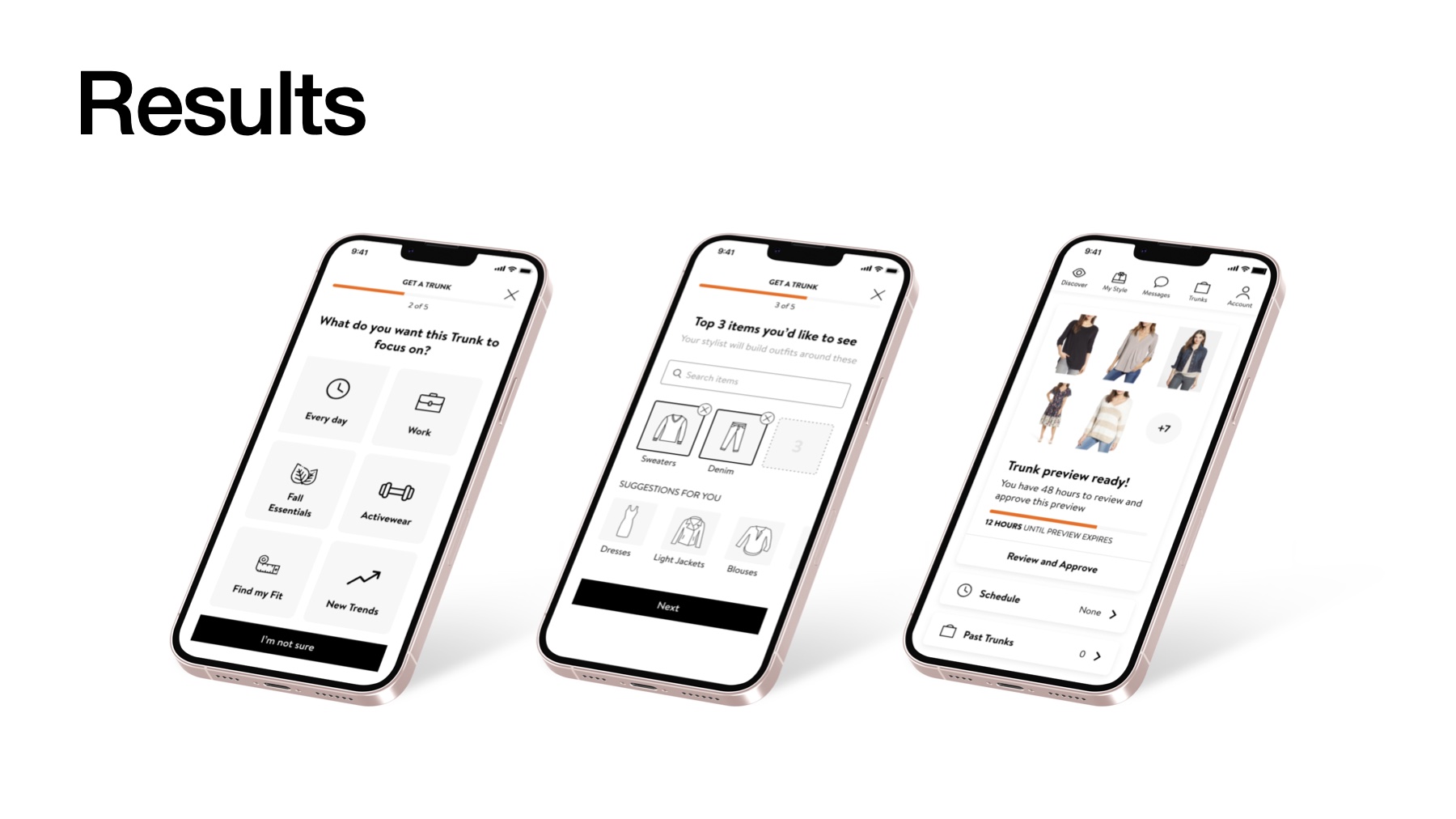
The other two metrics beat their targets too. Preview confirmation rose 6% against a 2% target. Preview expiration fell 10% against a 4% target.
My PM and designer presented the results to Nordstrom leadership at the monthly product review. The feedback was positive.
Challenges and team
Challenges
- A product manager new to the role.
- A brand and design system integration with Nordstrom, mid-project.
My role and team
Director of Product Design. I led a product designer and worked with a product manager, an engineering manager, a researcher and seven developers. The Customer First Experience team also worked with business analysts, brand and market insights.